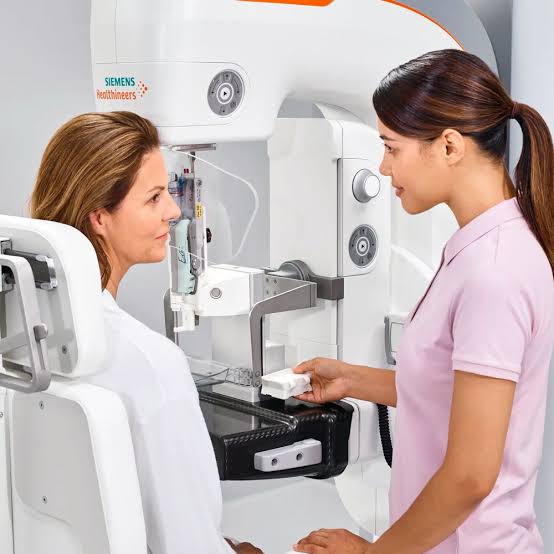
Breast cancer is one of the most common types of cancer among women. Today, however, advances in medical imaging technologies have significantly improved treatment outcomes and quality of life for patients whose breast cancer is detected at an early stage. One of the advanced imaging methods that has gained prominence in this field is 3D Tomosynthesis Mammography.
Going beyond standard digital mammography, this advanced technology captures images of the breast tissue in multiple layers, allowing for a more detailed evaluation, particularly in women with dense breast tissue.
At Centermed, advanced imaging technologies and an experienced radiology team provide high-standard diagnostic services aimed at supporting women's breast health.
What Is 3D Tomosynthesis Mammography?
3D Tomosynthesis Mammography is an advanced digital mammography technique that uses low-dose X-rays to obtain images of the breast from multiple angles.
While standard mammography produces two-dimensional images of the breast, tomosynthesis technology creates numerous thin image slices, allowing the breast to be evaluated in three dimensions.
This can help separate overlapping breast tissues and allow suspicious areas to be assessed in greater detail.
How Does 3D Tomosynthesis Differ from Standard Mammography?
In conventional mammography, some normal breast tissues may overlap, potentially creating false-positive findings or making small lesions more difficult to detect.
3D Tomosynthesis technology, on the other hand:
- Images the breast tissue layer by layer.
- Can reduce the effect of overlapping tissues.
- Can help provide a clearer assessment of small masses.
- Can improve diagnostic confidence.
- May reduce the need for unnecessary additional imaging.
Because of these features, it is now one of the imaging techniques used in many breast imaging centers worldwide.
The Importance of 3D Tomosynthesis in Early Detection
Early detection of breast cancer is one of the most important factors in expanding treatment options and improving survival outcomes.
3D Tomosynthesis Mammography can:
- Help detect certain millimeter-sized lesions at an earlier stage.
- Allow more detailed assessment of the extent of a tumor.
- Provide clearer evaluation of small clusters of calcifications.
- Contribute to the detection of early-stage tumors.
For patients diagnosed at an early stage, regular screening is particularly important because it may allow for less extensive surgical procedures and help preserve quality of life.
Why Is It Particularly Beneficial for Dense Breast Tissue?
Evaluation of standard mammograms can be more challenging in women with dense breast tissue.
Dense fibroglandular tissue can obscure certain lesions.
3D Tomosynthesis may:
- Allow the different layers of breast tissue to be evaluated separately.
- Facilitate the assessment of small masses that might otherwise be hidden.
- Contribute to reducing false-positive findings.
- Increase the radiologist's diagnostic confidence.
For this reason, tomosynthesis can offer important advantages for women with dense breast tissue.
Who May Be Recommended 3D Tomosynthesis Mammography?
Depending on the assessment of a specialist physician, 3D Tomosynthesis may be considered appropriate for:
- Women aged 40 and above
- Individuals undergoing breast cancer screening
- Women with dense breast tissue
- Individuals with a family history of breast cancer
- High-risk individuals carrying BRCA gene mutations
- Patients who have previously undergone breast surgery
- Individuals who require regular follow-up examinations
The appropriate screening program should be determined by a physician based on age, individual risk factors, and family history.
Advantages of 3D Tomosynthesis Mammography
This technology offers several important advantages:
Higher Diagnostic Accuracy
Three-dimensional imaging allows the breast tissue to be evaluated in greater detail.
Clearer Visualization of Small Lesions
It can contribute to the assessment of very small structural changes.
Fewer Unnecessary Callbacks
It may help reduce false-positive findings and decrease the need for additional imaging.
More Effective Imaging in Dense Breast Tissue
Compared with standard mammography, it can provide a more detailed evaluation of dense breast tissue.
Contribution to Surgical Planning
The size and location of detected lesions can be assessed more accurately, which may contribute to treatment and surgical planning.
What Is the Examination Process Like?
3D Tomosynthesis Mammography is very similar to standard mammography.
During the examination:
- The breast is briefly compressed.
- The system acquires images from different angles.
- The imaging process takes only a few seconds.
- Patients can return to their daily activities immediately afterward.
The examination is generally completed within a short period and does not require special preparation. Unless your physician provides different instructions, routine preparation is sufficient.
The Importance of Regular Screening for Breast Cancer
Breast cancer does not always cause noticeable symptoms.
Therefore, the following can play an important role in early detection:
- Regular medical examinations
- Age-appropriate mammography screening
- Breast ultrasound when necessary
- Breast MRI for individuals in high-risk groups
The screening program should be personalized according to each individual's risk profile.
3D Tomosynthesis Mammography at Centermed
With its advanced technological infrastructure in breast imaging and experienced radiologists, Centermed provides comprehensive diagnostic services aimed at supporting women's breast health.
With 3D Tomosynthesis Mammography:
- High-resolution images can be obtained.
- Breast tissue can be evaluated in detail.
- When necessary, the assessment can be complemented by advanced imaging methods such as breast ultrasound and breast MRI.
- Findings are evaluated by specialist radiologists in conjunction with the patient's clinical information.
The goal is to support patients throughout the early detection process and provide reliable diagnostic evaluation.
Frequently Asked Questions
Is 3D Tomosynthesis Mammography painful?
As with standard mammography, the breast is briefly compressed during the examination. This may cause temporary discomfort for some individuals.
Does Tomosynthesis involve more radiation?
With modern systems, the radiation dose is administered within international safety standards. The dose may vary depending on the technology used and the imaging protocol.
Why is it preferred for dense breast tissue?
Its layered imaging approach can make it easier to evaluate overlapping breast tissues.
Does every woman need to have 3D Tomosynthesis?
The appropriate screening method should be determined according to age, individual risk factors, family history, and the physician's clinical assessment.
Conclusion
Early detection is one of the most important factors in the successful treatment of breast cancer. Advanced imaging technologies can contribute to detecting the disease at an earlier stage and support the planning of appropriate treatment options.
3D Tomosynthesis Mammography is an important breast imaging technique thanks to its high image quality, layered imaging capability, and particular advantages in women with dense breast tissue.
With advanced imaging systems and an experienced radiology team, Centermed aims to provide reliable and comprehensive diagnostic services dedicated to supporting women's breast health.