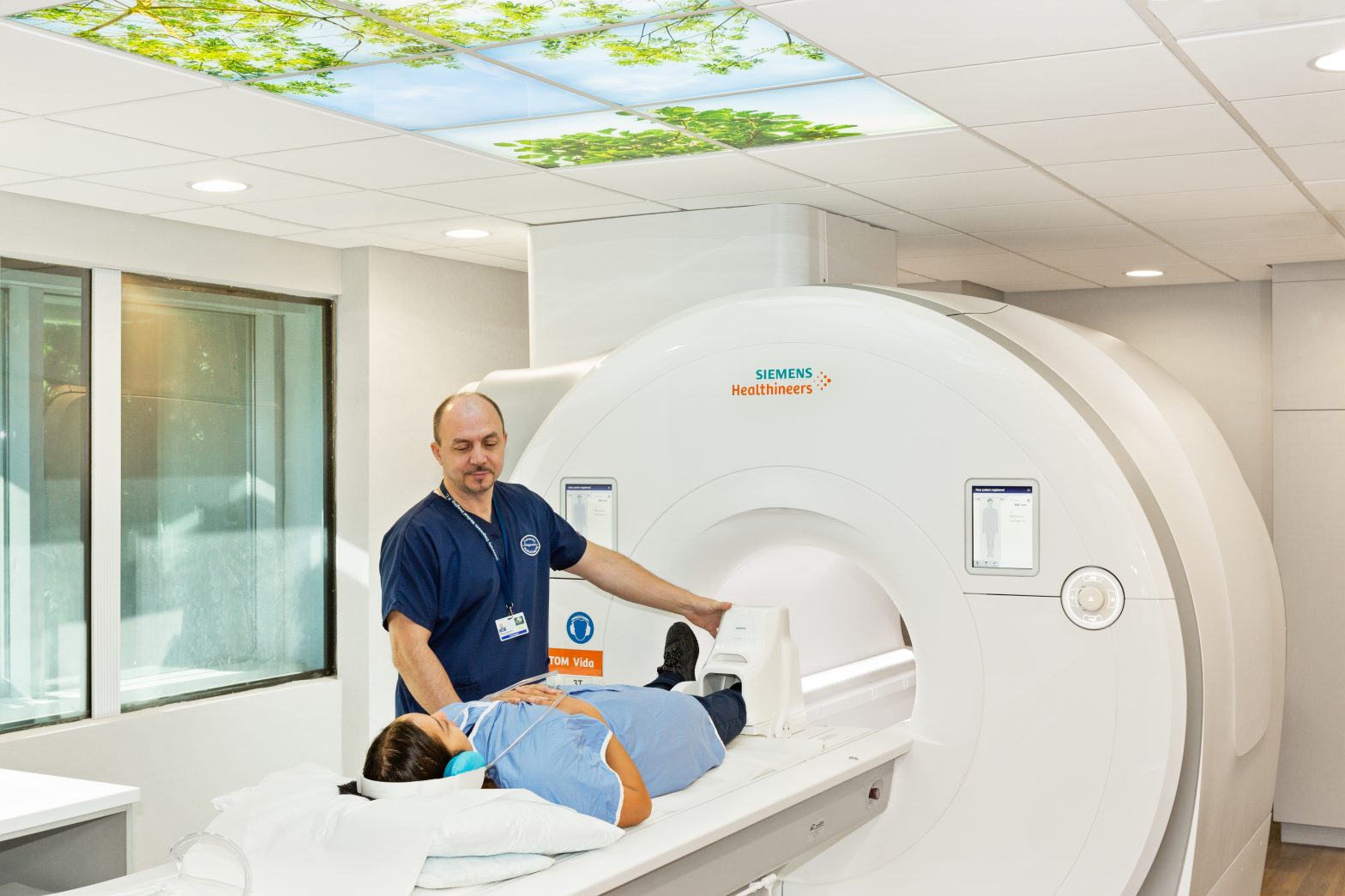
Neurological diseases are among the health conditions that can occur at any stage of life, and early diagnosis can significantly improve treatment outcomes. When evaluating diseases of the brain, spinal cord, and nervous system, not only the expertise of specialist physicians but also the quality of the imaging technology used plays a crucial role.
At Centermed, experienced physicians specializing in advanced neurological imaging work together with high-resolution 3 Tesla Magnetic Resonance Imaging (MRI) technology to support the most accurate planning of the diagnostic process for both pediatric and adult patients.
Why Is Early Diagnosis Important in Neurological Diseases?
Many neurological disorders may present with mild symptoms in their early stages. Symptoms such as headaches, memory problems, loss of balance, numbness in the arms or legs, speech difficulties, or seizures may result in progressive neurological diseases being overlooked if they are not properly evaluated at an early stage.
Early diagnosis can:
- Help slow the progression of the disease.
- Enable earlier treatment planning.
- Reduce the risk of permanent neurological damage.
- Help preserve patients' quality of life.
- Prevent unnecessary tests and loss of time.
For this reason, combining experienced physicians with high-quality MRI systems can provide significant advantages in neurological evaluation.
Accurate Imaging Is Essential in Pediatric Neurology
The development of the nervous system in children differs from that of adults. Therefore, accurate interpretation of imaging findings requires evaluation by specialists experienced in pediatric neurology.
3 Tesla MRI technology can provide detailed imaging, particularly in conditions such as:
- Developmental delay
- Epilepsy
- Congenital brain abnormalities
- Hydrocephalus
- Brain tumors
- Cerebrovascular diseases
- Metabolic and genetic neurological disorders
- Hypoxic brain injuries
High-resolution images can allow very small structural abnormalities to be evaluated in greater detail and, when necessary, contribute to advanced treatment planning.
Technology and Expertise Go Hand in Hand in Adult Neurology
Many neurological disorders seen in adults require detailed imaging, particularly during the early stages of the disease.
These include:
- Stroke
- Multiple sclerosis (MS)
- Parkinson's disease
- Alzheimer's disease and dementia
- Brain tumors
- Pituitary disorders
- Cerebral aneurysms
- Epilepsy
- Movement disorders
- Chronic headaches
Obtaining images alone is not sufficient for an accurate diagnosis. Evaluating imaging findings together with neurological signs and symptoms by experienced specialists can improve diagnostic accuracy.
Why Does 3 Tesla MRI Make a Difference?
The magnetic field strength of an MRI system is one of the key factors directly affecting image quality.
The advantages of 3 Tesla MRI technology include:
- Higher image resolution
- Higher signal-to-noise ratio (SNR)
- More detailed visualization of small lesions
- Detailed assessment of brain anatomy
- The ability to perform advanced neurological MRI sequences
- Shorter examination times in certain types of scans
- High accuracy in functional assessments
These advantages can provide significant support for physicians in the diagnostic evaluation of complex neurological cases.
Advanced MRI Applications Used in Neurological Imaging
Centermed's 3 Tesla MRI infrastructure enables advanced neurological examinations beyond standard brain imaging.
Diffusion MRI (DWI)
Diffusion-weighted imaging can help evaluate changes in brain tissue, even during the early hours following a stroke.
Perfusion MRI
Perfusion MRI evaluates blood flow within brain tissue and can be used in the assessment of brain tumors and vascular diseases.
MR Angiography (MRA)
MR angiography can provide imaging of the cerebral blood vessels, either with or without contrast agents.
MR Venography (MRV)
MR venography provides important information for evaluating the venous system of the brain.
Tractography (DTI)
Diffusion Tensor Imaging (DTI) tractography maps the nerve fiber pathways in the brain and can be particularly useful for neurosurgical planning.
Functional MRI (fMRI)
Functional MRI can contribute to the evaluation of areas of the brain responsible for speech, movement, and memory. It can provide particularly valuable information before brain tumor surgery.
The Importance of High-Resolution 3 Tesla MRI in Epilepsy Diagnosis
Identifying the seizure focus in patients with epilepsy is one of the fundamental steps in treatment planning.
With 3 Tesla MRI, the following can be evaluated in greater detail:
- Cortical dysplasia
- Hippocampal sclerosis
- Small structural abnormalities
- Congenital abnormalities of brain development
This can provide significant advantages, particularly for patients being considered for surgical treatment.
Image Quality in Multiple Sclerosis (MS) Monitoring
Detecting new lesions and assessing disease activity in patients with MS can directly influence treatment decisions.
High-resolution 3 Tesla MRI can contribute to:
- Detecting small lesions
- Monitoring disease progression
- Evaluating treatment effectiveness
Centermed's Approach to Advanced Neurological Imaging
At Centermed, the advanced neurological imaging process is planned through a combination of experienced specialist physicians, advanced 3 Tesla MRI technology, and a patient-centered approach.
Imaging protocols are tailored to each patient based on their clinical history. This approach aims to obtain high-quality images that support diagnostic evaluation in both pediatric and adult patients.
Frequently Asked Questions
Can 3 Tesla MRI be used in children?
Yes. When considered appropriate by the physician, 3 Tesla MRI can also be used in pediatric patients. The examination process is planned according to the child's age and clinical condition.
Why is 3 Tesla MRI preferred for brain disorders?
Its high-resolution imaging capabilities can help provide a more detailed assessment of small anatomical structures and certain lesions.
Is advanced neurological MRI necessary for every patient?
No. The appropriate imaging method is determined according to the patient's symptoms, clinical examination findings, and the specialist physician's medical assessment.
Conclusion
The first step toward successful management of neurological diseases is an accurate and timely diagnosis. In this process, combining specialist medical expertise with advanced imaging technology is of great importance.
With its experienced team specializing in advanced neurological imaging and high-resolution 3 Tesla MRI technology, Centermed provides comprehensive imaging services that support the diagnostic process for both pediatric and adult patients.
Through early diagnosis, accurate evaluation, and a personalized approach, Centermed aims to be a trusted partner in the management of neurological diseases.